
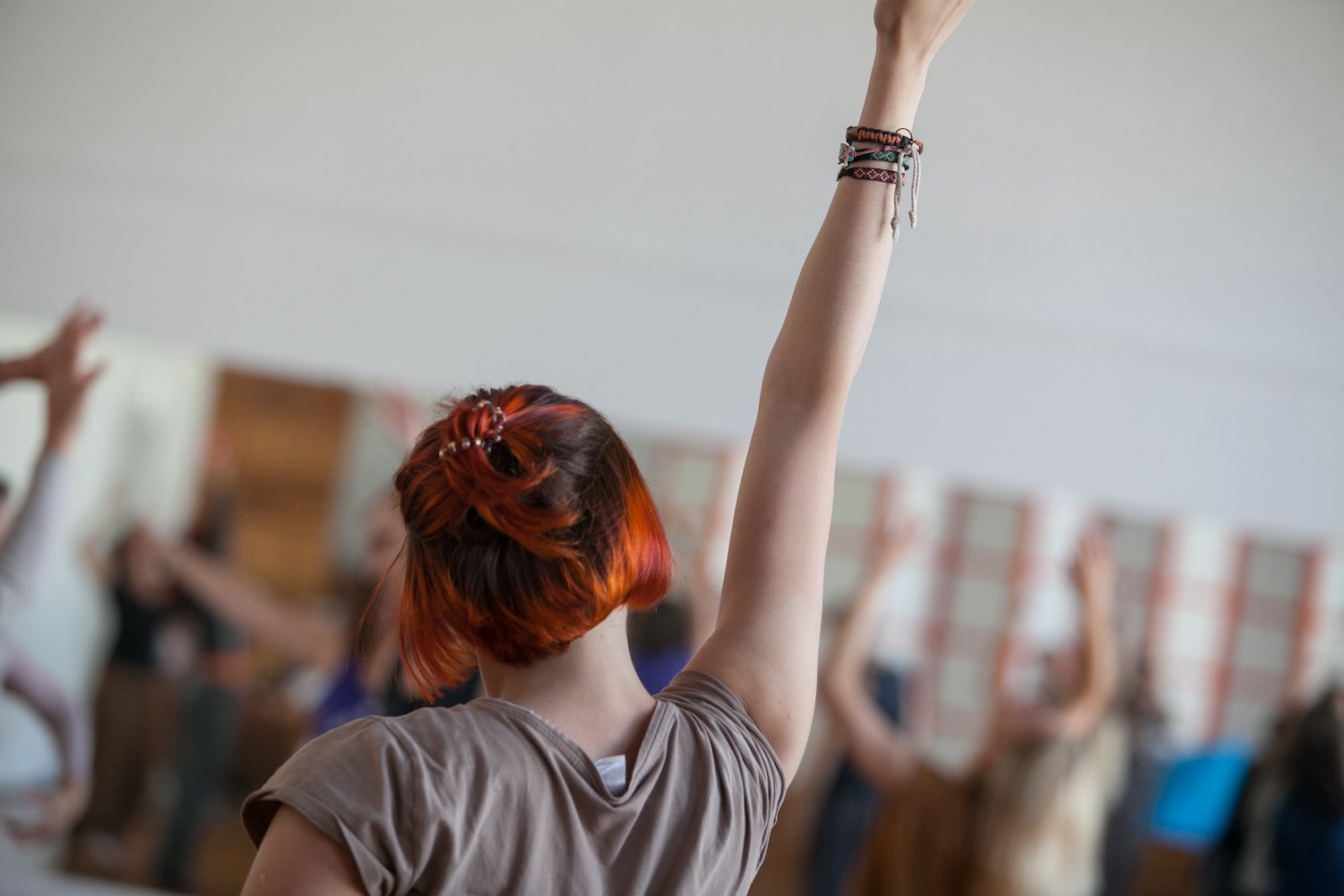
An active, client-centred approach
About Dance Movement Therapy
Dance Movement Therapy is an experiential form of psychotherapy that is based on the assumption that the body and mind are interrelated, and that changing movement patterns affects change in other areas. It uses an active, client-centred approach, which encourages an individual to share thoughts, feelings and express themselves using movement and words in an environment that is safe, supportive and uplifting.
Who Benefits?
Dance Movement Therapy benefits everyone, from people who don’t usually dance through to those that enjoy movement.
It is ideal for people who feel self-conscious physically, uncomfortable in their body or disconnected from their body due to trauma or physical disabilities as it uses gentle and non-intrusive methods.
For children, the nonverbal aspect of dance movement therapy supports growth and integration of motoric, perceptual-motor, verbal processing skills, cognition and communication, and social emotional development.
DTNZ offers a variety of dance movement therapy individual, group programmes. Find out more about a programme that suits you.

Supporting People Living with Diverse Needs
The focus on nonverbal behaviour can help those with autism and other neurodiverse needs improve socialisation and communication, build body awareness, and directly affect motor deficits. Movement can provide a bridge for contact and a vehicle for communication between the dance therapist and the individual.
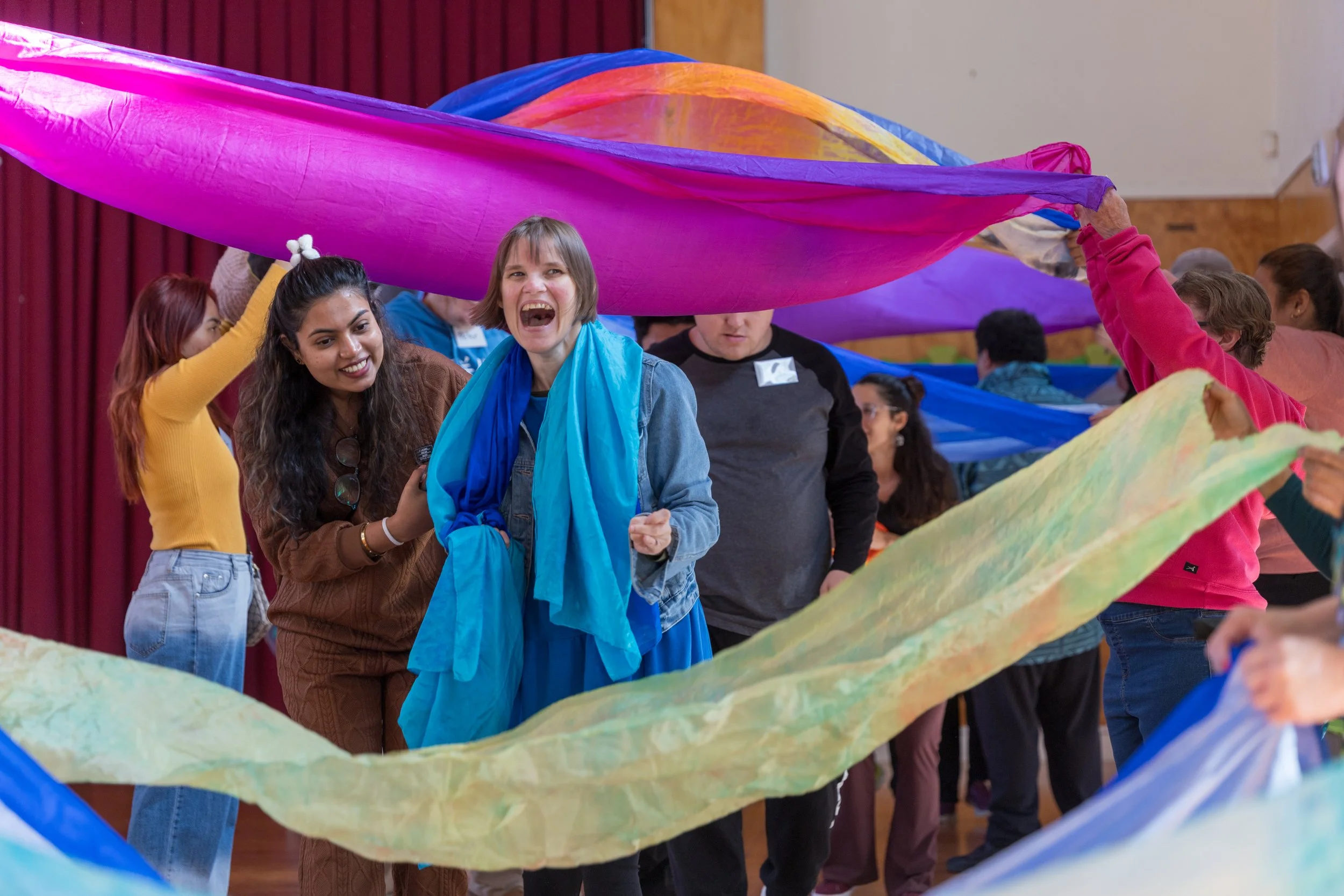
If you can move, you can dance!
If you can move, you can dance!
FAQs
-
If your think that the STARS or Arts 4 Us SPECIALITY programme is right for your child/teen:
Make an enquiry through the website or email clients@dancetherapy.co.nz or phone: 096363029
Our administrator will contact you to find out some basic information
You will be emailed a registration form (or you can fill this out on our website) – this gives us more detailed information about your child/teen and their history. This helps the therapist during the assessment to understand your child/teens needs better.
If a group is potentially available your child/teen will be required to attend an assessment. This is 30-60 minutes long with a creative arts therapist. The assessment is a chance for the therapist to understand your child’s needs, for your child to try out some new activities that are offered during the sessions and for you to ask any questions.
Following the assessment the Therapist will talk to you about:
* the group that would be most appropriate for your child, or the need for your child to begin with individual or DYAD/TRIAD sessionIf a group is not currently available (eg. Sometimes we get enquiries for children/teens who are too young/old to join with a group we currently have), you will be offered an assessment for an individual therapy programme or you can ask to be placed on our waiting list (in case a group becomes available that meets your child’s needs). We try and stay in touch with carers/parents on the waiting list on a termly basis.
Prior to joining a group you will be asked to complete a consent form.
If you think that the Arts 4 Us drop in or Dance for Us is right for you or your child/teen:
Make an enquiry through the website or email clients@dancetherapy.co.nz or phone: 096363029.
We can answer your questions and let the therapist know you are likely to attend.
Simply ‘drop in’ on the correct day/time – see programme calendar for these.
-
Our current programme costs are as follows:
Dance 4 Us (adult and youth classes) – Termly registration @ $8 per session
Arts 4 Us general (for school aged children living in the community of programme) – free
STARS $189.75 (incl gst)/term (8 weeks)
Arts 4 Us specialty $225 (incl gst)/term (8 weeks)
-
Carer Support:
If you receive carer support you can designate the cost of an hour of this to the dance/arts therapy session. Bring your form along for the therapist to sign. You claim this money directly.Individual funding:
If your child/teen has been Needs Assessed and has Home and Community Support Services or a Respite allocation you may wish to discuss with your assessor Individual Funding. This allows you to decide who/how this funding is spent. You can use part of the funding towards the cost of therapy/a programme. This option can be discussed with Taikura Trust.Contact us at: clients@dancetherapy.co.nz to learn how you can use your Individualised Funding and Carer Support/I Choose with DTNZ
Disability Allowance subsidised counselling
If you are receiving the disability allowance through WINZ (Work and Income New Zealand) you may be eligible for subsidised counselling. If you are not currently receiving to check if you meet their income criteria click hereAssistance is provided for counselling if the need for counselling is directly related to a person’s disability. You, your doctor and your therapist (who must be a member of the New Zealand Arts Therapy Association - ANZACATA) will need to fill out the Disability Certificate - Counselling (download the form here).
From time to time we become aware of possible avenues to assist with therapy costs. We will endeavour to keep you informed of these. Click on possible funding sources to aid parents
Links: (click)
Taikura TrustHalberg Trust Activity Fund Grant
-
We are lucky enough to have therapists who speak a range of languages (eg. Chinese, Japanese, Spanish, English). If you need help with initial communication let us know.
-
Yes!
-
Yes!